Temporal Perception
Synchrony, duration, recalibration, and timing in interactive systems
Temporal perception asks how time is perceived when there is no dedicated sensory organ for time. The work studies synchrony, temporal order, duration, rhythm, reaction time, recalibration, and the way perceived timing changes with context, expectation, attention, and action.
Time is also a critical feature of multisensory integration. Signals that arrive together are more likely to be interpreted as belonging to the same event, while artificially introduced asynchronies can prevent integration or change the perceived event itself. Short exposure to an asynchrony can recalibrate simultaneity, making later discrepancies appear less pronounced, and these aftereffects can transfer across sensory pairings depending on how signals are presented.
The same questions matter for technology. Computers, cameras, displays, audio devices, trackers, and VR systems introduce delays, and those delays affect both experiments and user experience. This topic therefore includes methods for measuring stimulus timing, psychophysical procedures for estimating temporal sensitivity, and applied work on timing in XR, haptics, and musical ensemble performance.
Key Questions
Related Keywords
Portfolio and Resources
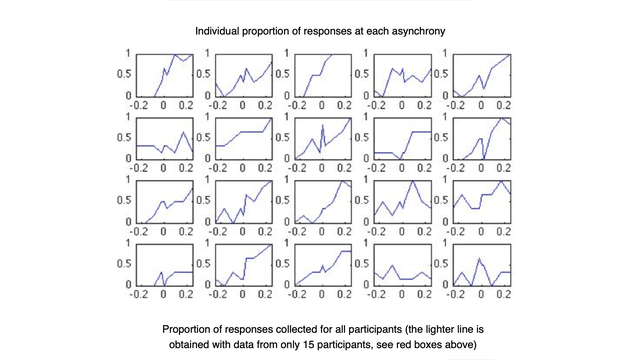 TIMELY tutorial and psychometric fitting scripts
Methods and tutorial material for comparing psychometric fitting procedures and temporal sensitivity measures.
TIMELY tutorial and psychometric fitting scripts
Methods and tutorial material for comparing psychometric fitting procedures and temporal sensitivity measures.
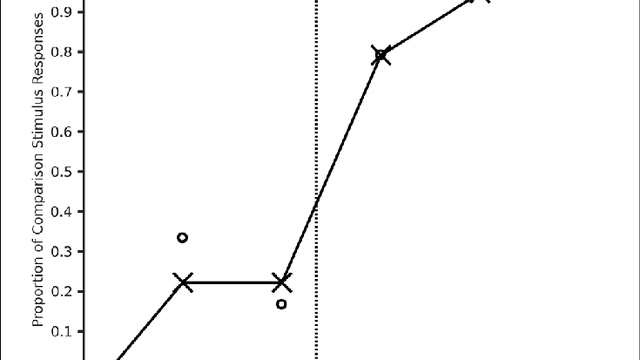 Spearman-Karber and WAVE method scripts
Reproducible scripts for psychophysical threshold estimation and timing analysis.
Spearman-Karber and WAVE method scripts
Reproducible scripts for psychophysical threshold estimation and timing analysis.
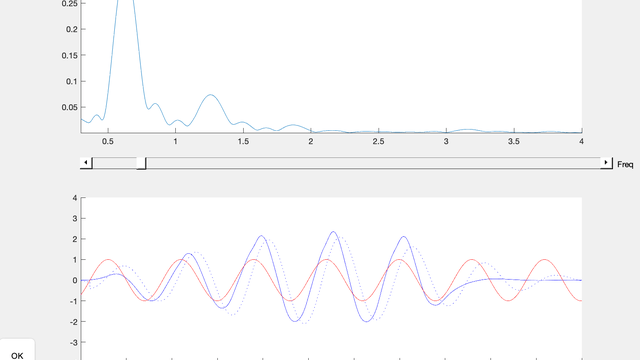 VR delay measurement code
Software supporting reproducible measurement of end-to-end latency in virtual reality systems, linked to work on timing accuracy in psychophysical and XR experiments.
VR delay measurement code
Software supporting reproducible measurement of end-to-end latency in virtual reality systems, linked to work on timing accuracy in psychophysical and XR experiments.
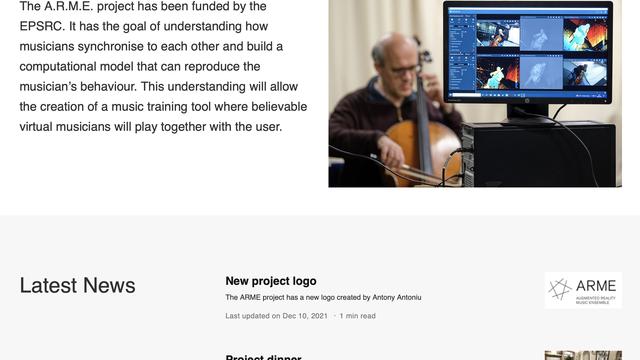 Augmented Reality Music Ensemble
Research platform and public resources for augmented and virtual music ensemble rehearsal, connected to MyJAMS and spin-out activity.
Augmented Reality Music Ensemble
Research platform and public resources for augmented and virtual music ensemble rehearsal, connected to MyJAMS and spin-out activity.
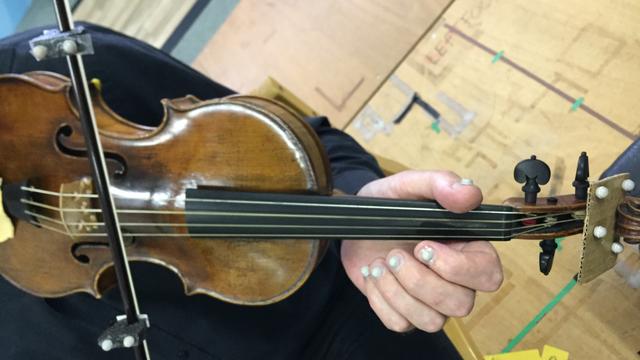 Virtuoso Strings dataset
Open string ensemble recordings, scores, and onset annotations for timing analysis, automatic music transcription, and ARME research.
Virtuoso Strings dataset
Open string ensemble recordings, scores, and onset annotations for timing analysis, automatic music transcription, and ARME research.
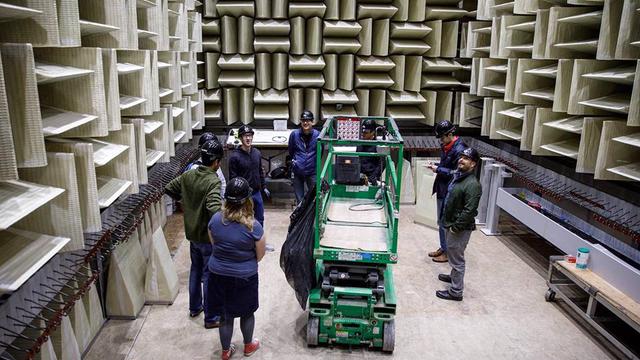 AMUSER
Augmented MUSic Ensemble Rehearsal translation work, developing app and impact pathways from ARME research.
AMUSER
Augmented MUSic Ensemble Rehearsal translation work, developing app and impact pathways from ARME research.
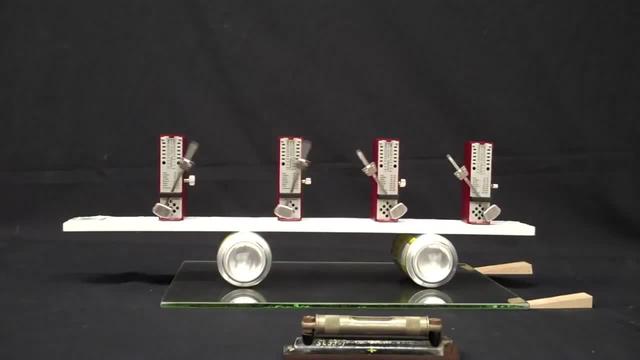 MUSEX
MUSic Ensemble eXhibition, translating ARME research into exhibition, impact, and public engagement outputs.
MUSEX
MUSic Ensemble eXhibition, translating ARME research into exhibition, impact, and public engagement outputs.Featured Publications
Articles in temporal perception 28
Cite Code Dataset Project ISMIR 2023 LBD ARME project Scores Onset annotations
Related Research Areas

Massimiliano Di Luca
Associate Professor in Psychology and Computer Science
Associate Professor in Psychology and Computer Science at the University of Birmingham, studying human perception and interaction in dynamic, technology-mediated environments.