
Psychophysics
Measuring perception, action, and user experience
Psychophysics provides the measurement backbone of the research programme. It is used to quantify what people perceive, how reliably they can discriminate sensory signals, how their judgments change with context, and how experimental apparatus affects the signals that reach the observer.
The methods include thresholds, just-noticeable differences, points of subjective equality, psychometric functions, reaction-time analysis, duration judgments, temporal-order judgments, forced-choice tasks, user evaluations, and studies of adaptation and recalibration. These tools make it possible to connect behaviour to the physical properties of stimuli and to the design constraints of devices.
Psychophysics is also central to translation. Whether the goal is a wearable haptic system, a VR hand-tracking method, an XR interaction technique, a music rehearsal platform, or a tactile ageing study, behavioural measurement provides the evidence needed to decide what works, what fails, and what people actually perceive.
Key Questions
Related Keywords
Portfolio and Resources
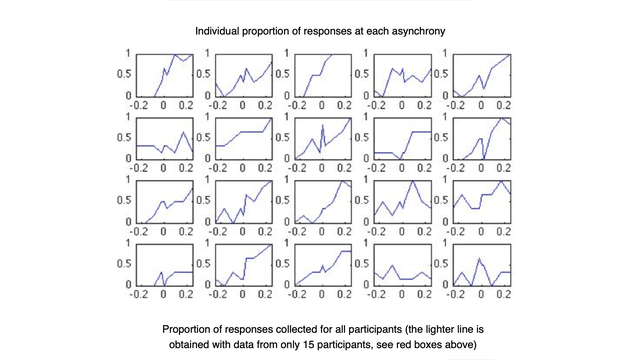 TIMELY tutorial and psychometric fitting scripts
Methods and tutorial material for comparing psychometric fitting procedures and temporal sensitivity measures.
TIMELY tutorial and psychometric fitting scripts
Methods and tutorial material for comparing psychometric fitting procedures and temporal sensitivity measures.
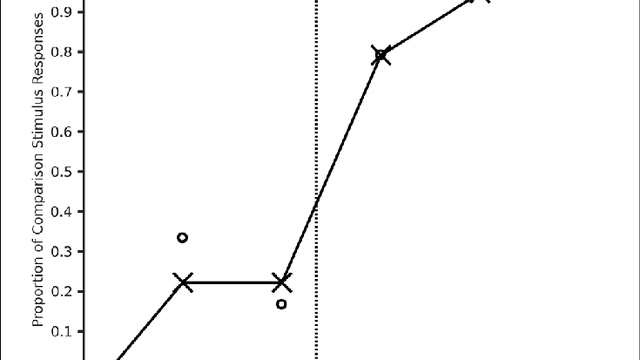 Spearman-Karber and WAVE method scripts
Reproducible scripts for psychophysical threshold estimation and timing analysis.
Spearman-Karber and WAVE method scripts
Reproducible scripts for psychophysical threshold estimation and timing analysis.
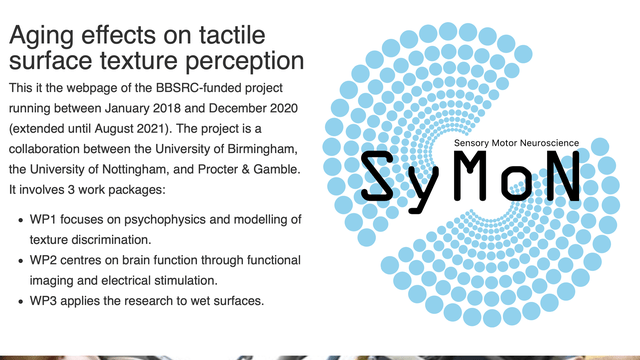 Aging Touch website
Public research resource on tactile perception, ageing, and surface texture perception, linked to BBSRC-supported work.
Aging Touch website
Public research resource on tactile perception, ageing, and surface texture perception, linked to BBSRC-supported work.
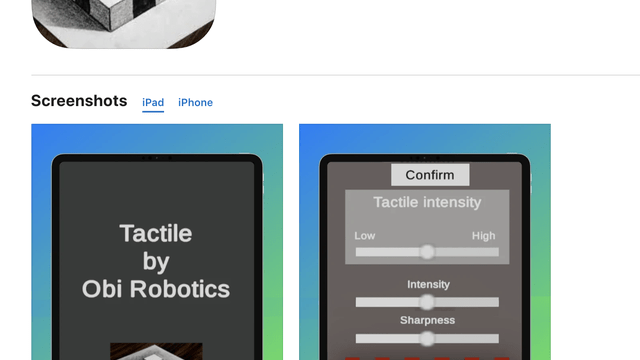 Tactile iPhone experiment
Mobile tactile perception experiment translating multisensory texture research into an accessible public app.
Tactile iPhone experiment
Mobile tactile perception experiment translating multisensory texture research into an accessible public app.
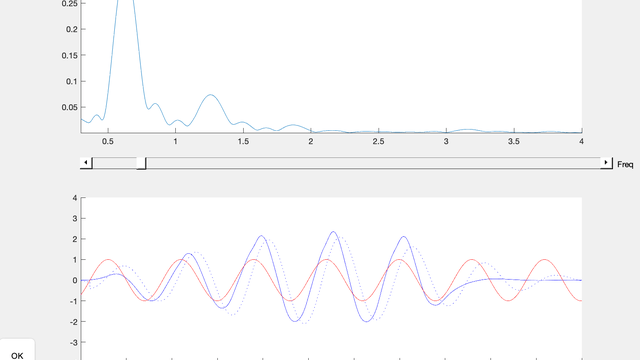 VR delay measurement code
Software supporting reproducible measurement of end-to-end latency in virtual reality systems, linked to work on timing accuracy in psychophysical and XR experiments.
VR delay measurement code
Software supporting reproducible measurement of end-to-end latency in virtual reality systems, linked to work on timing accuracy in psychophysical and XR experiments.
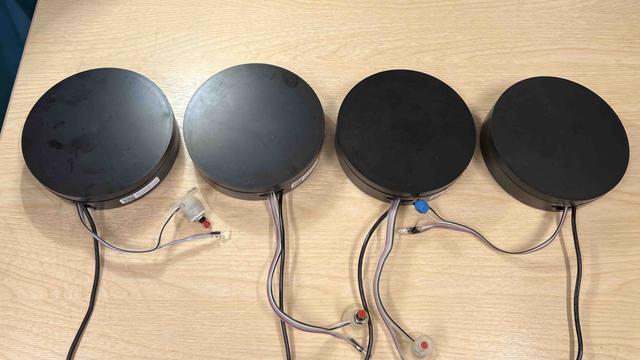 Arduino Lazy Susan
Archived remote-research demonstrator for shipping robotic stimuli and supporting sensory experiments at a distance.
Arduino Lazy Susan
Archived remote-research demonstrator for shipping robotic stimuli and supporting sensory experiments at a distance.Featured Publications
Articles in psychophysics 25
Related Research Areas

Massimiliano Di Luca
Associate Professor in Psychology and Computer Science
Associate Professor in Psychology and Computer Science at the University of Birmingham, studying human perception and interaction in dynamic, technology-mediated environments.