Haptics
Touch, force feedback, and tactile interaction
Haptics is the part of the research programme concerned with touch as an active, informative, and designable signal. The work asks how people perceive texture, softness, weight, force, vibration, and contact, and how those perceptual mechanisms can be used to build haptic systems that feel useful rather than merely mechanically accurate.
A central theme is that touch is not a single measurement channel. Softness, for example, depends on forces, finger position, vision, proprioception, timing, and the movement used to explore an object. The same physical object can feel different when information arrives late, when visual and haptic signals disagree, or when different fingers contribute different evidence during a grasp.
This topic also includes applied haptic rendering and wearable feedback: vibrotactile guidance, skin stretch, tactile augmentation, wrist and hand devices, virtual stiffness, and haptic feedback for XR and mixed reality. Across these projects, psychophysical measurement is used to identify what people can reliably detect and discriminate, while modelling and system design translate those findings into interactive devices, demonstrations, and public resources.
Key Questions
Related Keywords
Portfolio and Resources
 Aging Touch website
Public research resource on tactile perception, ageing, and surface texture perception, linked to BBSRC-supported work.
Aging Touch website
Public research resource on tactile perception, ageing, and surface texture perception, linked to BBSRC-supported work.
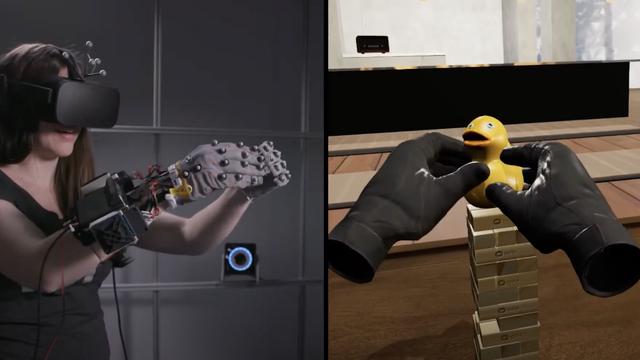 Oculus Connect haptic demo
Interactive haptic demonstration translating perceptual research into an industry-facing XR experience.
Oculus Connect haptic demo
Interactive haptic demonstration translating perceptual research into an industry-facing XR experience.
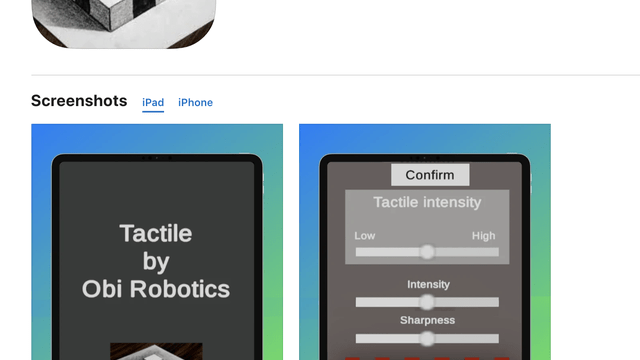 Tactile iPhone experiment
Mobile tactile perception experiment translating multisensory texture research into an accessible public app.
Tactile iPhone experiment
Mobile tactile perception experiment translating multisensory texture research into an accessible public app.
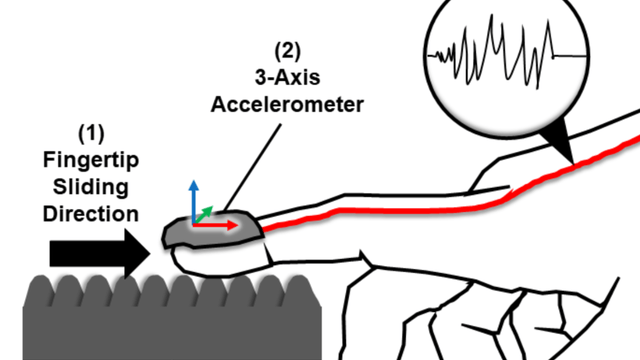 TactileMirror code
Code for a wearable sensory substitution device, supporting reproducible haptics and tactile augmentation research.
TactileMirror code
Code for a wearable sensory substitution device, supporting reproducible haptics and tactile augmentation research.
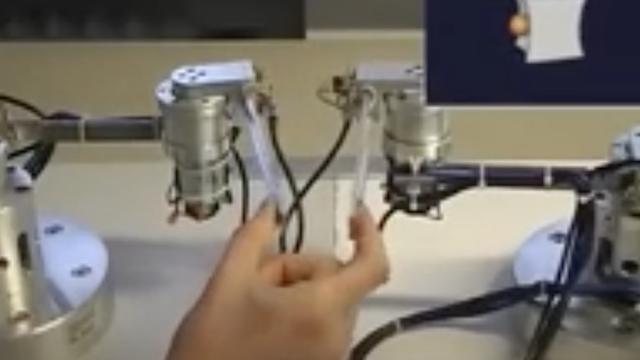 Simulation of a virtual stiffness
Archived demonstration of virtual stiffness and visual-haptic interaction.
Simulation of a virtual stiffness
Archived demonstration of virtual stiffness and visual-haptic interaction.
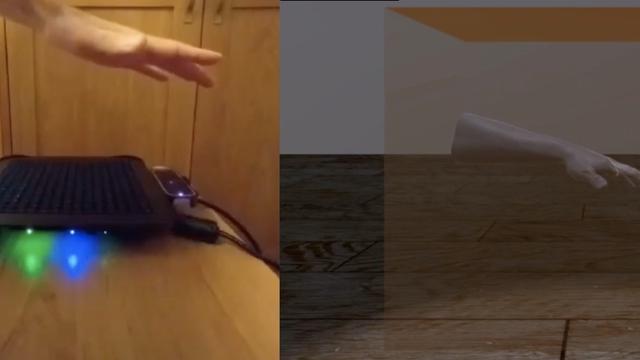 Ultrasound/visual virtual viscosity
Archived demo exploring perceived viscosity through combined ultrasound and visual stimulation.
Ultrasound/visual virtual viscosity
Archived demo exploring perceived viscosity through combined ultrasound and visual stimulation.Featured Publications
Articles in haptics 37
Related Research Areas

Massimiliano Di Luca
Associate Professor in Psychology and Computer Science
Associate Professor in Psychology and Computer Science at the University of Birmingham, studying human perception and interaction in dynamic, technology-mediated environments.